
The History and Evolution of Space Exploration (Reading practice for TOEFL preparation)

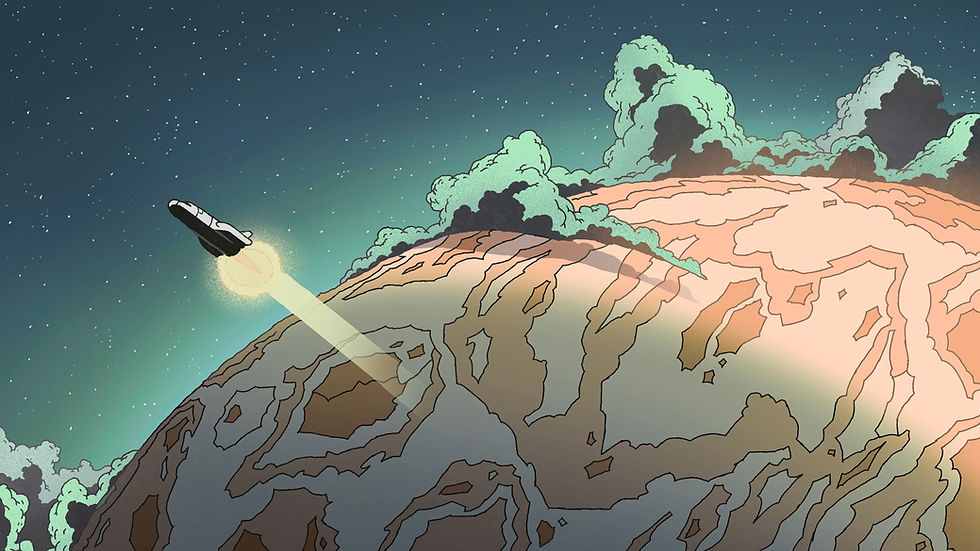
Space exploration has captured the imagination of humanity for centuries, representing a quest for knowledge and a drive to push the boundaries of what is possible. Over time, it has evolved from simple observations of the night sky to complex missions beyond Earth.
The history of space exploration began with early astronomers who studied celestial objects using basic tools like telescopes. Their observations laid the foundation for understanding the universe and inspired future generations to look beyond our planet.
The modern era of space exploration started in the mid-20th century. In 1957, the Soviet Union launched Sputnik 1, the first artificial satellite, into orbit. This marked the beginning of the space race, a period of intense competition between the United States and the Soviet Union to achieve major milestones in space exploration. In 1961, Yuri Gagarin became the first human to travel to space, a historic moment that highlighted the potential of human spaceflight.
The United States made its own significant achievement in 1969 when NASA’s Apollo 11 mission landed astronauts on the Moon. Neil Armstrong’s famous words, “That’s one small step for man, one giant leap for mankind,” became a symbol of human ingenuity and determination.
Since then, space exploration has expanded to include international cooperation and advanced technologies. The construction of the International Space Station (ISS) has brought together scientists and astronauts from around the world to conduct research in microgravity. Robotic missions, such as the Mars rovers, have provided valuable insights into other planets and the potential for life beyond Earth.
Despite these advancements, space exploration faces challenges. High costs, technological risks, and the environmental impact of rocket launches remain significant concerns. However, private companies like SpaceX are working to reduce costs and make space more accessible, opening new possibilities for the future.
In conclusion, the history and evolution of space exploration reflect humanity’s curiosity and resilience. By overcoming challenges and continuing to innovate, space exploration promises to unlock new discoveries and expand our understanding of the universe.
Questions:
What marked the beginning of the modern era of space exploration?
a) The invention of the telescope.
b) The launch of Sputnik 1.
c) The discovery of new planets.
d) The creation of the ISS.
Who was the first human to travel to space?
a) Neil Armstrong.
b) Buzz Aldrin.
c) Yuri Gagarin.
d) John Glenn.
What was a major achievement of the Apollo 11 mission?
a) The launch of the first artificial satellite.
b) The first human landing on the Moon.
c) The construction of the ISS.
d) The first robotic mission to Mars.
What is one challenge faced by space exploration today?
a) Lack of international cooperation.
b) High costs and technological risks.
c) Inability to study microgravity.
d) Declining interest in space exploration.
What is the main idea of the text?
a) Space exploration has only faced challenges.
b) Space exploration’s history shows humanity’s quest for knowledge and innovation.
c) The ISS was the first step in space exploration.
d) Robotic missions have replaced human spaceflight.
Answers:
b) The launch of Sputnik 1.
c) Yuri Gagarin.
b) The first human landing on the Moon.
b) High costs and technological risks.
b) Space exploration’s history shows humanity’s quest for knowledge and innovation.


Comentarios